Outlier detection for standardized tests
Screening a national exam for anomalous results is only actionable if each flag can be explained to the people who must act on it.
- Status
- Conference presentation (unpublished)
- Period
- 2020 — 2022
- Themes
- Fair & reliable predictive modeling
Research question
How can statistical and machine-learning methods support interpretable screening for anomalous standardized-test results?
Why it matters
A university selection exam allocates places, and a flagged result can trigger review of an individual test taker. Screening therefore carries consequences in both directions: missed anomalies undermine the exam, and unexplained flags are not defensible to the agency that has to act on them.
The challenge
Anomalies in test data are rare, heterogeneous and not labeled, which rules out supervised detection and rewards methods whose output a reviewer can read. A single score is needed, but it has to be traceable back to the evidence that produced it.
Approach
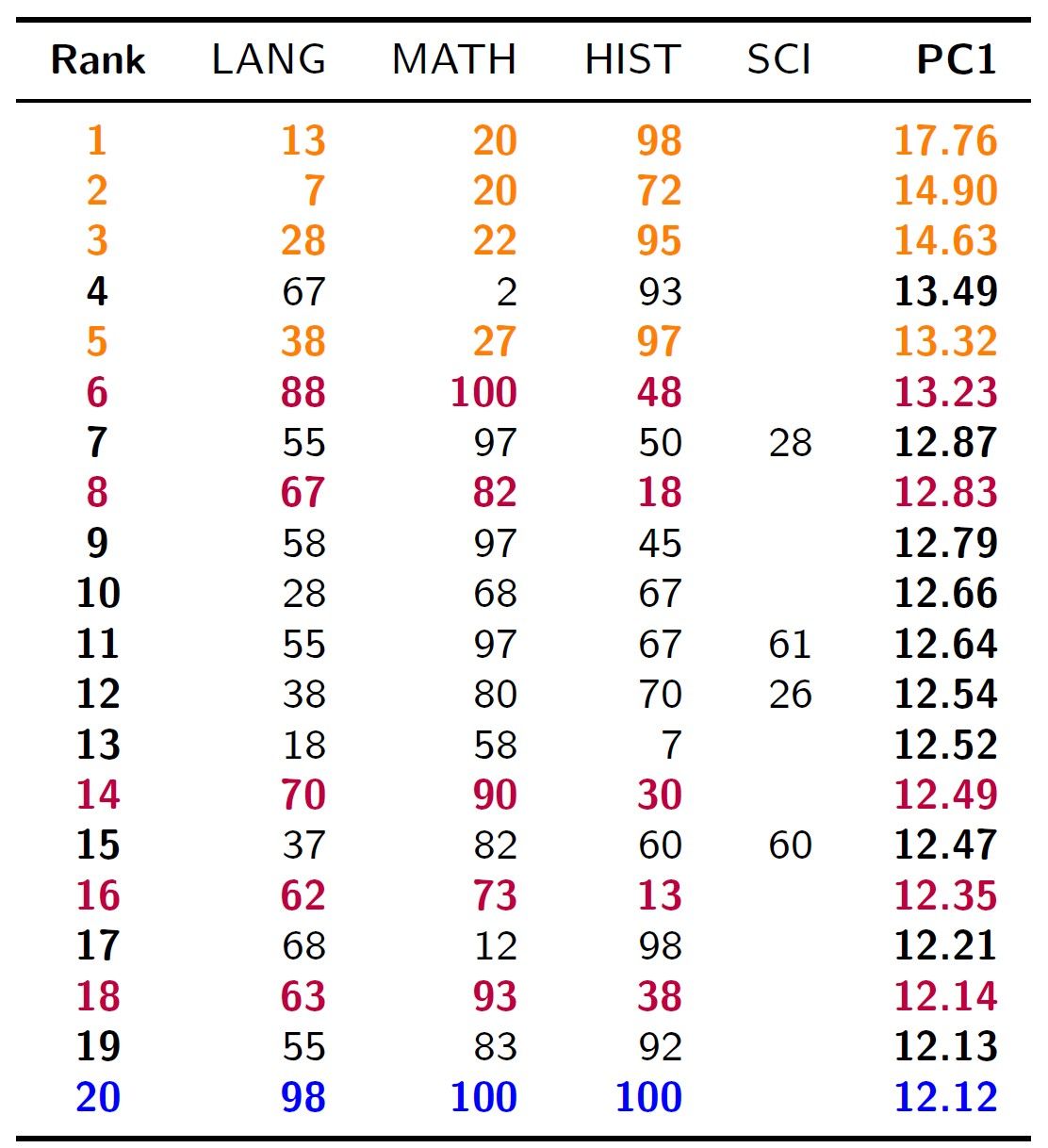
The project developed an outlier-detection protocol combining statistical discrepancy measures, clustering-based screening and outlier-detection models into one interpretable anomaly score per test taker. The methodology was validated and presented to DEMRE, the government agency responsible for administering the exam.
Status
Presented at the XIV Chilean Conference on Operations Research (OPTIMA 2021) at Universidad Católica del Maule in March 2022. This is an unpublished conference presentation, not a publication.
Formal outputs
-
Conference presentation (unpublished) · 2022
On the outlier detection for standardized tests